
- Harvest maturity is judged by finger caliber in 1/32 inch and by bunch age from tagging.
- Ripening uses controlled pulp temperature, ethylene dosing and CO2 venting.
- Brix rises from low single digits when green to around 18–23 °Brix when fully yellow.
- Bananas are chilling-sensitive: hold at about 13–14 °C in transit, never cold-room temperatures.
For G9 Cavendish (Grand Naine) exporters and ripeners, Brix is the number that connects the farm gate to the consumer’s palate. A green banana at harvest is mostly starch; a fully ripe one is mostly sugar. How that conversion unfolds depends on harvest maturity, the cold chain and ripening room control. Mapping Brix across these stages gives buyers a practical way to specify quality and diagnose problems. For seasonal fruit, see our Kashmir running apple wholesale supply.
Maturity by caliber and age
Bananas are harvested green and mature, never ripe. Two indices are used together:
- Caliber: the finger’s diameter measured with a caliper gauge at mid-length, expressed in 1/32 inch. Readings are taken on a representative finger, usually from the outer row of a middle hand. As the finger fills, its angular ridges round off and caliber rises.
- Age: bunches are tagged with coloured ribbons at flowering (shooting) each week, so the harvest crew can cut by age. Days from flowering to harvest vary with season and region, being shorter in warm months and longer in cool months.
Long voyages call for slightly lower maturity (lower caliber or fewer days) to preserve green life; domestic and short-haul markets can take fuller fruit. Overmature fruit may begin ripening in transit, which is the most common cause of mixed-ripe arrivals.
Ripening rooms and ethylene
Bananas are climacteric. Commercial ripening triggers the climacteric with exogenous ethylene under controlled conditions:
- Equalise pulp temperature, typically within about 14–18 °C, before gassing; lower temperatures give slower, more even ripening.
- Apply ethylene, commonly around 100–150 ppm for about 24 hours, in a sealed room.
- Vent to keep CO2 below about 1%, because elevated CO2 delays and unevens ripening.
- Hold humidity around 90–95% to protect peel quality.
- Step temperatures down as colour develops to control the pace, commonly over a 4–8 day cycle.
Pressurised (forced-air) ripening rooms push air through the pallets so that every box sees the same temperature and gas, which is the key to uniform colour. Respiration and heat output rise sharply once the climacteric starts, so refrigeration capacity must match the load.
Brix by ripening stage
Brix is read with a refractometer on pulp juice. Green pulp yields little juice, so many labs blend pulp with a known volume of water and correct for the dilution; whatever method is used should be stated, as it affects the reading. Sample from mid-finger pulp and from several hands, because proximal (top) hands are older and often ripen ahead of distal hands.
| Colour stage | Peel description | Indicative Brix (°Brix) | Trade use |
|---|---|---|---|
| 1 | All green | About 1–5 | Export shipment, pre-ripening |
| 2 | Green, trace of yellow | About 4–8 | Start of ripening cycle |
| 3 | More green than yellow | About 8–13 | Dispatch to distant retail |
| 4 | More yellow than green | About 13–17 | Dispatch to nearby retail |
| 5 | Yellow, green tips | About 16–20 | Shelf display |
| 6 | All yellow | About 18–22 | Peak eating quality |
| 7 | Yellow with brown flecks | About 19–23 | Fully ripe, short shelf life |
These ranges are indicative and vary with origin, season and maturity at harvest. Fruit harvested immature may colour but stay starchy and low in Brix; that pattern, mapped across a shipment, points to a harvest-maturity problem rather than a ripening-room fault.
Using a Brix map to diagnose problems
A Brix map is simply a structured sample: readings recorded by pallet position, by hand position on the cluster and by colour stage, compared against the expected curve. Read together, the patterns are informative:
- Low Brix at full colour across the lot: fruit was harvested immature or ripened too fast at high temperature, so colour ran ahead of starch conversion.
- High variation between pallets in the same room: uneven airflow or temperature in the ripening room, often a stacking or tarp-sealing issue in pressurised rooms.
- High variation between hands from the same bunch: normal to a degree, but a wide spread suggests mixed-maturity bunches were packed together.
- Normal Brix with dull peel and poor flavour: look for chilling exposure in transit before blaming the ripener.
Recording reefer temperature logs alongside the Brix map makes it far easier to settle quality claims on evidence rather than opinion.
Chilling injury
Bananas are chilling-sensitive. Below roughly 13 °C, membrane damage leads to dull, greyish or smoky peel, brown sub-epidermal streaks, uneven ripening and, in severe cases, failure to ripen. Damage accumulates with time and temperature and often shows only after ripening, which makes it a frequent source of claims. Transit and holding should be at about 13–14 °C, with reefers pre-cooled to set-point and probes placed in the pulp, not just the air. Fruit should never be put into a general cold room at 2–4 °C alongside apples or vegetables.
Export packing
Export-grade G9 is dehanded at the packhouse, cut into clusters, washed to remove latex, and given crown-rot protection that complies with the destination’s MRL requirements. Clusters are packed in polyliners inside CFB boxes, commonly 13.5 kg or 18 kg net, then palletised and loaded into reefers. A phytosanitary certificate is issued by the NPPO India through its PQMS system, exporters hold an APEDA RCMC, and destination-specific requirements, including any HortiNet traceability where notified, should be checked before each programme.
Our desk specification for G9 Cavendish is caliber 39–46 (1/32 inch), packed in 13.5 kg or 18 kg boxes, MOQ 2 MT, with a transit loss tolerance target below 1.8%.
Indian origins
- Jalgaon (Maharashtra): India’s best-known banana belt, with large volumes of tissue-culture G9 and established packhouses for export programmes.
- Theni (Tamil Nadu): a significant export-oriented cluster with access to southern ports.
- Anand and central Gujarat: a strong G9 area with good road links to western ports.
Harvest calendars, finger size and Brix profiles differ between these belts and by season, so lots should be specified by origin as well as by caliber. For more on our fruit range see wholesale fruits, and for western-India sourcing see wholesale produce from Maharashtra. Or talk to our wholesale apple mandi supplier desk.
Working with our desk
Send your caliber band, box weight, destination and voyage time through our RFQ page, and we will match origin and maturity to your programme. For quick coordination, message our desk on WhatsApp at +91-9015316162.
Frequently asked questions
What caliber is used for export G9 bananas?
Caliber is measured across the middle of a representative finger, usually from the outer row of a middle hand, in 1/32 inch units. Export programmes commonly specify a band in the high 30s to mid 40s, depending on the voyage length and market. Our desk specification for G9 Cavendish is caliber 39–46 in 13.5 kg or 18 kg boxes.
What Brix does a ripe Cavendish banana reach?
Green mature pulp is high in starch and reads only a few degrees Brix. As ripening proceeds, starch converts to sucrose, glucose and fructose. At full yellow and flecked stages, readings around 18–23 °Brix are typical, though values vary with origin, season, maturity at harvest and the extraction method used for the refractometer sample.
Why should bananas not be stored in a regular cold room?
Bananas suffer chilling injury below roughly 13 °C. Symptoms include dull, greyish peel, brown streaking under the skin, uneven or failed ripening and poor flavour. Damage depends on temperature and exposure time and may only show after ripening. Transit and holding should be at about 13–14 °C, and fruit should never be kept at 2–4 °C.
More from Fruit Intelligence.
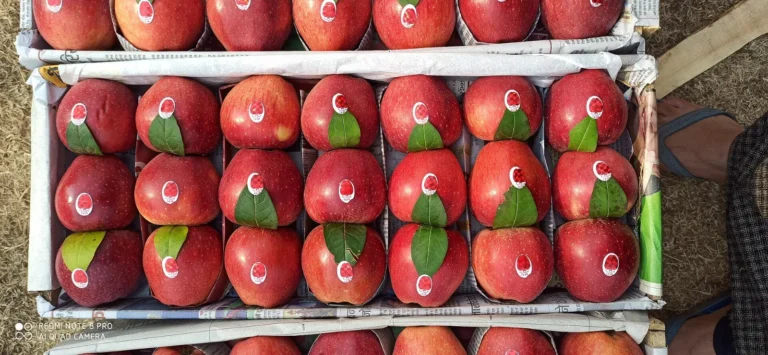
Apple Caliber Standards 80–120 mm: Grading, Counts and Tolerances
Caliber is the single specification that most often decides whether an apple consignment is accepted, discounted or rejected. This note explains how 80–120 mm fruit is measured, counted, graded and written into contracts.
Read the brief →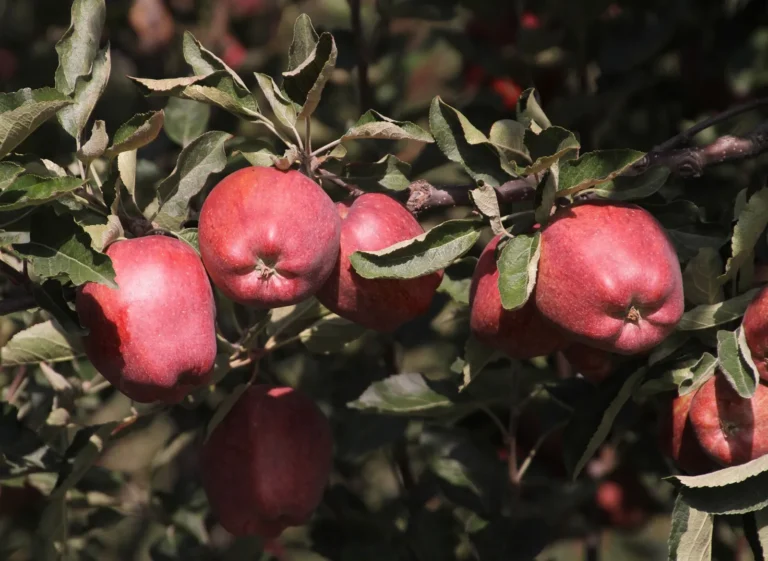
Kinnaur Apple CA Storage: Physiology, Set-Points and Disorders
Controlled-atmosphere storage can carry Kinnaur apples well into spring, but only when harvest maturity, room set-points and outloading are managed as one system. This note sets out the physiology behind each decision.
Read the brief →Ask for today’s rate
Choose the product, quantity (minimum 100 boxes for apples, 2 MT for other produce) and delivery city. Our desk replies on WhatsApp with the latest wholesale rate and dispatch slot.
- +91 90153 16162
- Voice
- +91 94599 98982
- info@bulkybusiness.com
- Desks
- Azadpur · Vashi · Nashik · Narkanda