
- Rabi onion stores for months; kharif onion should move quickly.
- Cure until the neck is tight and the outer scales are dry and papery.
- Bottom- and side-ventilated chawls limit heat and moisture build-up.
- Agree size bands, neck condition and defect limits in the PO.
Nashik red onion is bought on its keeping quality as much as on its colour and size. The same 50 kg leno bag can arrive in good condition after a fortnight in a reefer, or turn up with rooted, soft or mouldy bulbs. That difference depends mostly on three things: which season the crop came from, how well it was cured, and how it was held in the chawl. This note sets out how our desk judges each of the three before we load a lot. Alongside onions, we handle wholesale apple loading from Himachal and Kashmir.
Season decides storability before anything else
The Lasalgaon–Pimpalgaon belt supplies onion through three overlapping seasons. Each one has its own skin quality, dormancy and moisture profile, and buyers who treat them as one commodity tend to argue over claims later.
| Season | Typical harvest window | Skin and neck | Storage potential | Best use |
|---|---|---|---|---|
| Kharif | October–December | Thinner scales; necks often thick and slow to dry because of monsoon humidity | Poor; weeks, not months | Immediate domestic dispatch |
| Late kharif (rangda) | January–March | Better colour; moderate skin retention | Short to medium; varies with curing weather | Domestic and short-haul export |
| Rabi (summer) | March–May | Thicker, tighter scales; necks dry well in dry heat | Good; commonly four to six months in a well-run chawl | Chawl storage, lean-season supply, long-haul export |
Rabi onion is the crop that goes into storage and carries the market from about June until the new kharif arrives. Kharif bulbs are high in moisture and have short dormancy, so they should move quickly. Late-kharif lots sit in between. Their keeping quality depends heavily on whether the curing weeks stayed dry. Variety also matters. Kharif-adapted lines such as N-53 and Agrifound Dark Red are not grown for long storage, while rabi selections such as N-2-4-1 and the Bhima series from ICAR-DOGR are chosen partly for dormancy.
Field curing and shade curing
Curing dries the outer scales and seals the neck, which closes the main route for water loss and pathogen entry. A well-cured bulb loses moisture slowly. A poorly cured bulb with a soft neck keeps transpiring and is far more likely to develop neck rot or black mould later.
Field curing
After lifting, bulbs are left in windrows with the tops of one row laid over the bulbs of the next. The foliage shades the bulbs and limits sun scald. Field curing usually lasts about three to five days, depending on sun and wind. If rain is forecast, growers who move bulbs under cover early nearly always end up with better stock than those who leave them out.
Topping and shade curing
Tops are then cut, leaving a neck of roughly 2–2.5 cm. Cutting too close opens the neck to infection. The bulbs are spread thinly under shade or in a well-ventilated shed for a further period, typically ten days to three weeks. Curing is complete when:
- the neck is tight, dry and papery, with no green or moist tissue when pressed or twisted;
- the outer scales are dry, crackle slightly and have reached their full red colour;
- roots are dry and shrivelled;
- no free moisture shows on the bulb surface in the early morning.
Some weight is always lost during curing, generally a few per cent. That loss is expected and is the cost of a bulb that will store. Buyers who press for early dispatch to save curing shrink usually get their weight back as rot in the bag.
Chawl storage: bottom and side ventilation
Most Nashik storage is still ambient, in the traditional chawl. Improved designs are raised off the ground and use slatted or mesh floors for bottom ventilation and slatted side walls for cross-ventilation, under a roof that overhangs enough to keep out driving rain. Air should pass through the onion pile, not just around it.
- Bed depth: keep the onion column shallow enough for air to move through it. A heap that is too deep traps heat and moisture at its core, and that is where sprouting and rotting begin.
- Orientation: where the site allows, the long axis should sit across the prevailing wind.
- Sorting before loading: remove thick-necked, doubled, damaged and already-sprouted bulbs. One soft bulb wets its neighbours.
- Monsoon management: from about July to September ambient humidity climbs, and stock is most at risk from rooting and sprouting in this period. Inspect more often and sort out any pockets of rot promptly.
Cold storage is the other route. Recommended conditions are about 0–2 °C at 65–70% RH. Onions should not be held at the high humidity used for most vegetables, because high RH promotes rooting and sprouting. Bulbs leaving cold storage also need careful warming, or condensation forms on them during dispatch.
Weight loss, sprouting and rotting
Storage loss in onion has three parts: physiological weight loss through moisture and respiration, sprouting, and decay. In ambient chawl storage, total losses over a four-to-six-month hold are often cited at roughly 25–40%. The range varies widely with season of crop, curing, chawl design and monsoon conditions. Physiological weight loss usually accounts for the largest share in the first months. Sprouting and rots become more important as dormancy ends and humidity rises.
The common decay problems in stored Nashik onion are:
- Black mould (Aspergillus niger): dark powdery growth under the outer scales, worse in warm, humid stores;
- Basal rot (Fusarium): softening from the root plate, often carried in from the field;
- Bacterial soft rot: watery breakdown, usually after bruising or poor neck sealing.
For the buyer, this means a quoted price on stored onion should be read against the expected shrink between chawl and delivery point. A lot that has been sorted twice in storage and holds a tight neck will usually land with far less loss than a cheaper lot taken straight from a crowded heap.
Sizing and grading for export
Export buyers grade onion by bulb diameter. The bands that are common in trade include 25–40 mm for smaller-onion markets, 40–55 mm, and 55 mm and above. Exact bands and tolerances vary by importer, so they should be set out in the purchase order. Our desk specification for Nashik Red is 45–55 mm and above, packed in 25 kg or 50 kg leno bags, with a minimum order of 2 MT. Lots for export also have to comply with importing-country pesticide MRLs, and their phytosanitary certificates are issued through the Directorate of Plant Protection, Quarantine & Storage on PQMS.
| Parameter | What we check at loading |
|---|---|
| Season and storage history | Kharif, late kharif or rabi; weeks in chawl or cold store |
| Neck condition | Tight and dry; thick or green necks rejected |
| Skin | Outer scales intact and well coloured; limited peeling |
| Defects | Sprouted, rooted, doubled, mouldy and soft bulbs sorted out |
| Size | Graded to the agreed mm band; sample measured with a ring gauge |
| Packing | Leno bag weight checked; ventilated stacking in the truck or container |
Transport needs as much care as storage. Bags should be stacked to allow airflow, and long hauls should not run sealed and unventilated through humid weather. Our wider sourcing and grading approach is set out on our wholesale vegetables page, and sourcing from the Lasalgaon and Pimpalgaon belt is covered on our Maharashtra wholesale produce hub.
Working with our desk
Our Nashik desk can tell you the season, curing status and chawl history of a lot before you commit, and can share loading photos and size checks on request. To get a quote for onion by size band and bag, send your requirement through our RFQ page or message us on WhatsApp at +91-9015316162.
Frequently asked questions
Which Nashik onion season is best for storage?
Rabi or summer onion, harvested roughly March to May, stores best. It has thicker scales, longer dormancy and necks that dry well in hot, dry weather, so in a well-ventilated chawl it commonly keeps for four to six months. Kharif onion has thinner scales and short dormancy and should be sold quickly. Late-kharif keeping quality depends heavily on curing weather.
How do I know an onion lot is properly cured?
Press and twist the neck. It should be tight, dry and papery, with no green or moist tissue. The outer scales should be dry, fully coloured and slightly crackly, and the roots should be shrivelled. If necks are thick or soft, the lot was topped or dispatched early. Expect more neck rot and moisture loss in transit.
Why should onions not be stored at high humidity?
High relative humidity encourages onions to root and sprout and favours moulds such as black mould. Cold storage for onion is generally about 0 to 2 °C at 65 to 70 percent relative humidity, much drier than the conditions used for most vegetables. Ambient chawls rely on airflow to remove moisture, which is why monsoon months are the riskiest period for stored stock.
More from Vegetable Intelligence.
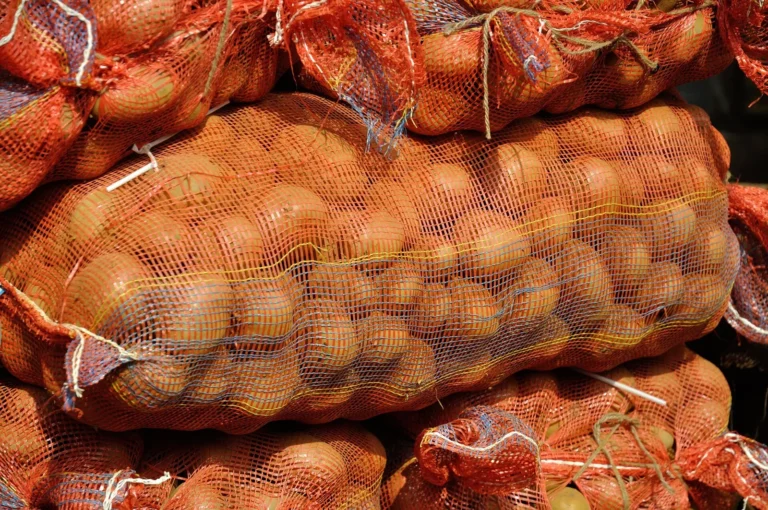
Chipsona-1 vs Lady Rosetta: Fry Quality for Chip Processors
Chipsona-1 and Lady Rosetta can both make an excellent chip, but storage history and sugar control decide whether a lot passes the fryer. This note sets out what procurement teams should specify and test.
Read the brief →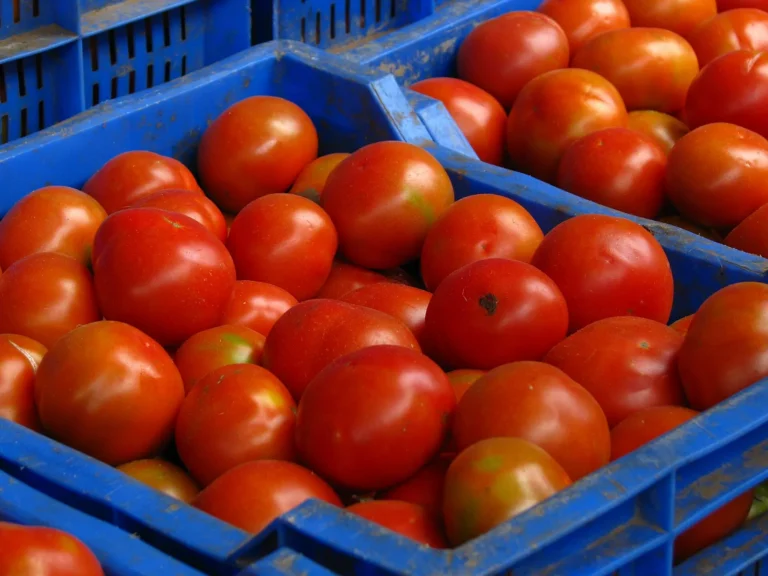
Tomato In-Transit Shrinkage: Weight Loss vs Physical Damage
Tomato transit loss is usually physical damage and over-ripening, not evaporation. This guide explains how to separate the two and set claims tolerances before dispatch.
Read the brief →Ask for today’s rate
Choose the product, quantity (minimum 100 boxes for apples, 2 MT for other produce) and delivery city. Our desk replies on WhatsApp with the latest wholesale rate and dispatch slot.
- +91 90153 16162
- Voice
- +91 94599 98982
- info@bulkybusiness.com
- Desks
- Azadpur · Vashi · Nashik · Narkanda