
- Respiration roughly doubles to triples per 10 °C rise (Q10 of 2–3).
- Specify pre-cooling by 7/8 cooling time measured on pulp temperature.
- Forced-air cooling suits most packed produce; hydrocooling needs sanitised water.
- Bananas and mature-green tomatoes must never be chilled like apples.
Every hour a harvested crate of apples spends in the orchard sun is an hour of shelf life spent before the produce has reached a buyer. The four-hour pre-cooling window is a practical working rule rather than a law of physics: it tells pack-house teams to start removing field heat within a few hours of picking, and not after an overnight wait. This note sets out why the window matters, how the main cooling methods compare and how we build pack-house flow around it. Field heat matters for Shimla apples picked in warm weather.
Field heat and why respiration sets the clock
Field heat is the sensible heat a commodity carries from the orchard or field. On a clear autumn afternoon in the Shimla hills, apple pulp temperature can sit well above the air temperature in exposed bins. Plains crops picked in summer arrive even hotter. Until that heat is removed, the produce keeps respiring at a high rate. It burns stored sugars and acids, gives off heat of its own (vital heat) and loses water through the skin.
Respiration rate rises steeply with temperature. Across the normal storage range the temperature quotient Q10 is roughly 2–3, meaning respiration about doubles or triples for every 10 °C rise. Apples held at 25 °C instead of 0 °C can therefore be respiring something like 5–15 times faster, depending on cultivar and maturity. In practice a few hours at orchard temperature can cost several days of storage life. Water loss follows the same pattern, because warm fruit in dry air sees a larger vapour-pressure deficit, so shrivel and weight loss build up quickly. These losses count directly against a transit-loss tolerance target such as our desk specification of under 1.8%.
Half-cooling and 7/8 cooling time
Cooling follows an approximately exponential curve: the product temperature closes on the cooling-medium temperature fast at first and then slowly. Engineers describe this with the half-cooling time, the time taken to remove half of the temperature difference between product and medium. Three half-cooling periods remove seven-eighths of that difference, and this is the 7/8 cooling time used to specify and compare cooling systems.
For example, with 24 °C fruit and 0 °C air, the 7/8 point is reached at 3 °C. Beyond 7/8 cooling the remaining heat comes out slowly, so most pack-houses take produce to about 7/8 in the pre-cooler and let the storage room finish the job. The 7/8 time depends on package venting, stacking pattern, airflow or water flow rate, fruit size and the temperature difference. Treat any published figure as a starting point to verify on your own loads with pulp probes.
Forced-air, hydro and room cooling compared
The method you choose depends on the commodity’s tolerance of wetting, its surface-to-volume ratio and how quickly it must be cooled.
| Method | How it works | Typical 7/8 cooling time (varies) | Suits | Watch-outs |
|---|---|---|---|---|
| Room cooling | Produce placed in a cold room; air moves around stacks, not through them | Often 24 hours or more | Low-respiration crops, overflow holding | Too slow as primary pre-cooling for perishables; uneven inside stacks |
| Forced-air cooling | Fans create a pressure difference that pulls cold air through vented cartons or bins | Roughly 1–10 hours | Apples, stone fruit, grapes, tomatoes, many vegetables | Needs adequate carton venting aligned in the stack; can dry produce if RH is low |
| Hydrocooling | Chilled water showered over or immersion of produce | Often well under an hour for small items | Water-tolerant crops such as sweet corn, carrots, some stone fruit | Water sanitation is essential; unsuitable for onions, potatoes for storage, and crops prone to water-borne decay |
Forced-air cooling is the workhorse for most packed produce. The design basics are simple. Vents should cover a meaningful share of each carton face (a few per cent of face area, commonly around 5%) and line up when cartons are stacked. Airflow is usually specified in litres per second per kilogram of product, and a tarp or baffle stops air short-circuiting around the stack. Hydrocooling is faster because water carries heat better than air. However, recirculated water spreads pathogens unless it is sanitised and monitored, for example by keeping free chlorine and pH within the ranges recommended for the system in use.
Designing a pack-house around the window
The four-hour window is mostly an operational problem, not a refrigeration one. The usual failures are produce waiting in the sun at the collection point, a pack line that has to finish grading before anything is cooled, and a cold room asked to pull down warm fruit while holding stored fruit at the same time. Our layout principles are:
- Shade from the first minute. Shaded collection points at the orchard and covered receiving bays at the pack-house reduce solar heat gain before cooling starts.
- Cool before or alongside grading. Where grading cannot keep pace, bin-level pre-cooling first and pack later is better than a warm backlog.
- Separate pull-down from holding. A dedicated forced-air tunnel or pre-cool room sized for the peak daily heat load keeps storage rooms stable. Refrigeration capacity for pull-down is much higher than for holding.
- Measure pulp, not air. Probe thermometers in fruit at the centre of the stack tell you when 7/8 cooling is reached; room air readings do not.
- Keep the chain unbroken. Load reefers from a cold dock with the unit already running at set-point, so that pre-cooled product is not re-warmed during loading.
For hill pack-houses near Narkanda and Theog, the narrow harvest window and steep orchard terrain make the shaded collection point the cheapest gain. More on regional sourcing is on our Himachal Pradesh wholesale produce hub.
Commodity-specific targets and the chilling-sensitive exceptions
Pre-cooling targets follow each commodity’s storage temperature. Cooling everything as cold as possible is wrong, and for some crops it is damaging.
| Commodity | Pre-cooling approach | Indicative target / holding range | Note |
|---|---|---|---|
| Apples (Royal Delicious) | Forced-air or room cooling soon after harvest | About −0.5 to 1 °C, 90–95% RH for storage | Our desk CA set-points are 1.5% O2 / 1.0% CO2 once rooms are sealed |
| Bananas (G9 Cavendish) | Gentle cooling, never cold | About 13–14 °C in transit | Chilling-sensitive: below this, peel dulling and uneven ripening |
| Tomatoes, mature-green | Forced-air to moderate temperature | Not below about 10–12 °C | Chilling injury impairs ripening and flavour |
| Onions (Nashik Red) | Cure first; no hydrocooling | 0–2 °C at 65–70% RH, or ventilated ambient | High RH drives rooting and sprouting |
| Processing potatoes (Chipsona-1) | Cure, then cool gradually | About 8–12 °C | Colder storage raises reducing sugars, darker fry colour and acrylamide |
The exceptions matter most. Bananas and mature-green tomatoes are chilling-sensitive, and the damage shows up days later at the ripening chamber or retail shelf, not at the cold room door. Onions and potatoes are not pre-cooled in the same sense: they need curing, and potatoes need gradual temperature ramps to avoid condensation and sugar accumulation. Our wider guidance on reefer set-points and transit planning sits under cold-chain logistics.
What buyers should ask a supplier
- How long, on average, between harvest and the start of cooling during peak season?
- Which cooling method is used, and what pulp temperature is recorded at the end of pre-cooling?
- Are pulp temperatures logged at loading, and is the reefer pre-cooled before loading?
- For chilling-sensitive lines, what is the lowest temperature the product sees anywhere in the chain?
Clear answers to these questions say more about arrival quality than any grade sticker. If you are specifying a contract, set pre-cooling and loading temperature clauses in your request for quotation. Ready to buy? See our wholesale apples page.
Working with our desk
Our Agronomy & Quality Desk can share the pre-cooling and loading temperature protocol we apply to each commodity before you confirm an order. For a protocol sheet or a quote, message us on WhatsApp at +91-9015316162.
Frequently asked questions
What is 7/8 cooling time?
It is the time needed to remove seven-eighths of the temperature difference between the produce and the cooling medium, equal to three half-cooling periods. It is the standard way to compare pre-cooling systems. After this point the remaining heat comes out slowly, so most pack-houses finish cooling in the storage room rather than holding fruit in the pre-cooler.
Is the four-hour window a fixed rule?
No. It is a practical working target that reflects how quickly respiration and water loss erode shelf life at orchard temperatures. Highly perishable crops benefit from even faster cooling, while cured onions and potatoes follow different handling. The principle is to start removing field heat within hours of harvest rather than leaving produce warm overnight.
Can bananas be pre-cooled to the same temperature as apples?
No. Bananas are chilling-sensitive and are normally carried at about 13–14 °C. Holding them near apple storage temperatures causes chilling injury such as dull, greyish peel and poor, uneven ripening. Mature-green tomatoes are similar and should not go below roughly 10–12 °C. Pre-cooling targets must follow each commodity's own safe range.
More from Cold-Chain Engineering.
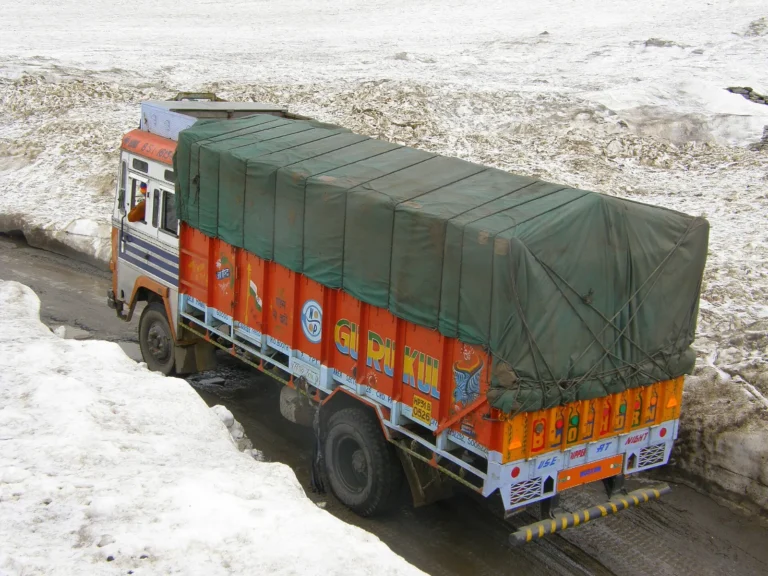
Reefer Telematics: Tracking Apples from Himachal to Azadpur
On the Narkanda-to-Azadpur apple lane, telematics only helps if it captures the hill section and produces evidence buyers accept. Here is what to instrument and how to build a delivered-temperature record.
Read the brief →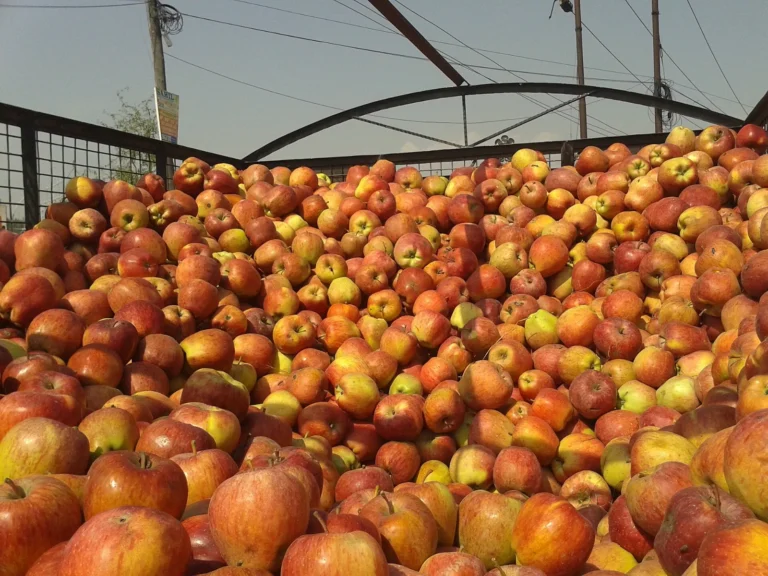
CA Storage Ethylene Control: Chemistry, 1-MCP and Scrubbers
Controlled-atmosphere storage works by suppressing ethylene production and response. Here is the chemistry behind low O2, high CO2, 1-MCP and ethylene scrubbers, with commodity thresholds and mixed-load rules.
Read the brief →Ask for today’s rate
Choose the product, quantity (minimum 100 boxes for apples, 2 MT for other produce) and delivery city. Our desk replies on WhatsApp with the latest wholesale rate and dispatch slot.
- +91 90153 16162
- Voice
- +91 94599 98982
- info@bulkybusiness.com
- Desks
- Azadpur · Vashi · Nashik · Narkanda